Resin Domed Labels for Industrial and Commercial Applications: Materials, Durability and Use Cases
Look at the badge on a three-year-old machine that has spent its working life outdoors. If the printed detail underneath is still crisp but the whole badge has taken on a faint amber cast, the print hasn’t failed. The resin has.
This is one of the more common issues buyers encounter with resin domed labels, and it often comes back to the original specification rather than a manufacturing fault. The resin was epoxy polyurethane would have been better suited to the application, and distinction was not established at quotation stage.
What the dome is actually doing
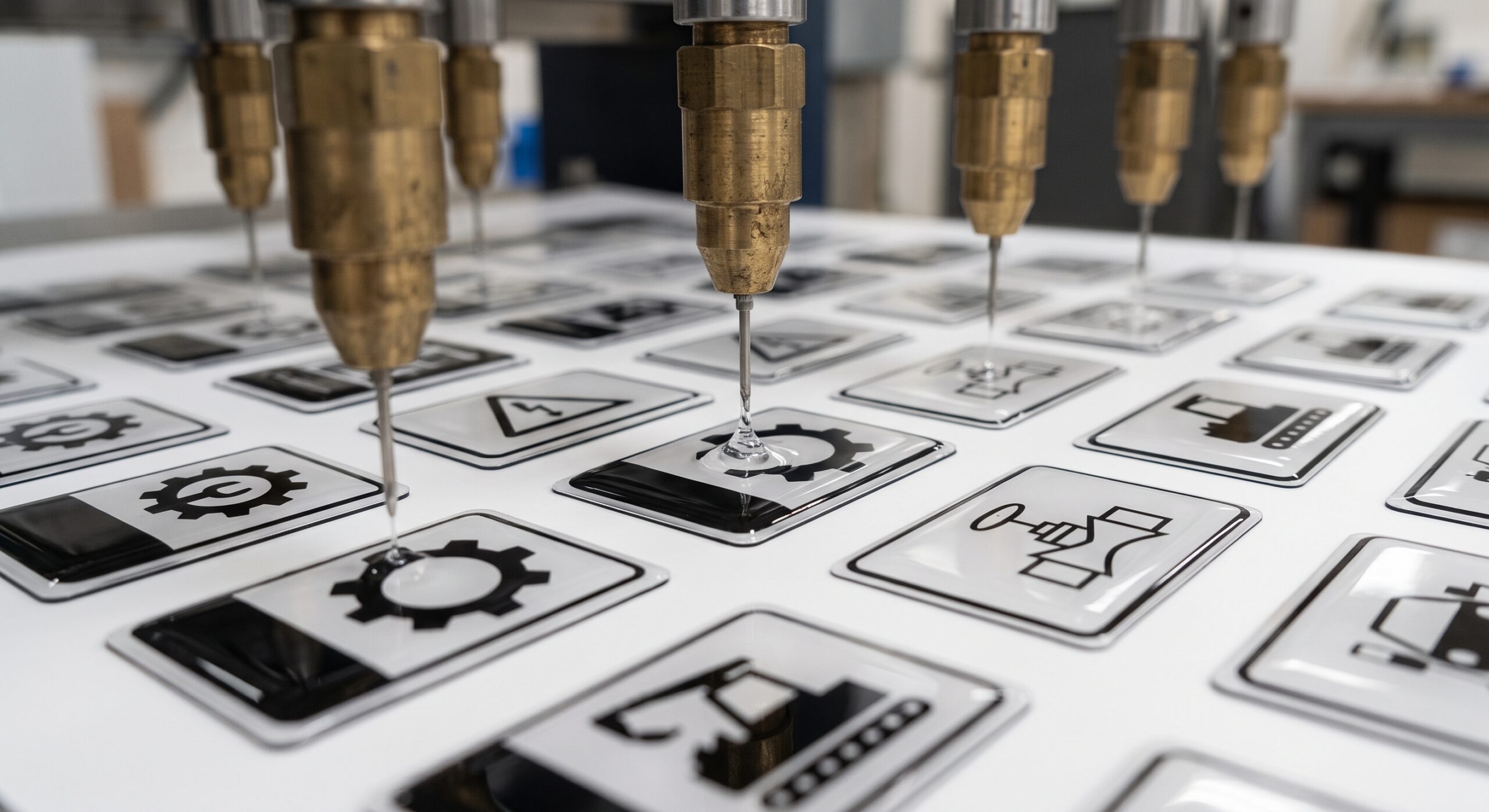
A resin domed label starts as a printed label: polyester, vinyl or a thin metal-effect foil, digitally printed or screen printed, then die cut to shape. The dome is a clear polyurethane resin applied over the top as a liquid. Surface tension holds it inside the cut edge while it self-levels and cures, producing the pillowed, glass-like face associated with 3D polyurethane doming.
The dome serves several purposes. It magnifies the artwork slightly, helping text and logo detail remain clear on a small label. It seals the printed layer against UV, moisture, cleaning chemicals and abrasion. The dome also adds physical depth, so minor knocks and scuffs reach the resin before the printed surface underneath.
Epoxy or polyurethane?
Both resins dome, and both can look identical on the sample card.
Epoxy cures harder and usually costs less, making it suitable for indoor, low-exposure work such as a badge on an office appliance, a promotional label or an interior fascia. Under sustained UV exposure, however, it can amber over time. Because the yellowing tends to affect the whole dome, it can make an otherwise sound badge look prematurely aged.
Polyurethane resin is more resistant to UV exposure and remains slightly flexible, which can be useful on curved surfaces or panels that flex and vibrate in service. A harder epoxy dome may be more prone to crazing or lifting at the edge in those conditions. For outdoor applications, vehicles, plants or products expected to remain in service for many years, polyurethane domed labels are generally the more suitable choice. If a quotation does not state which resin is being used, it is worth confirming before production.
The layers that decide how long it lasts
The print. Ink under a dome is protected, but not from everything. Dye-based digital print will still shift over time, even sealed. Where a Pantone or RAL reference has to hold across repeat batches, the print process and the retained colour standard matter as much as the resin above them.
The adhesive. More domed badges fail at the bond line than anywhere else on the build. A standard acrylic adhesive holds well on clean, high surface energy substrates: painted steel, glass, ABS. It won’t hold reliably on polypropylene, polyethylene, textured powder coating, or anything still carrying mould release residue. Those applications need a high-tack or modified acrylic system, sometimes with a primer, and that decision has to be made against the actual substrate rather than a generic one.
The shape. Resin flows, so very sharp internal corners, fine spikes and narrow slots can be difficult to dome cleanly consistently. The resin either overflows the cut edge or pulls back from the point. Radiused corners and simple outlines dome consistently at volume. If a logo includes a very sharp point, it is better to resolve that at artwork stage rather than at first article.
Where resin domed labels earn their place
Industrial resin domed labels are usually specified for one of two reasons: the badge needs to retain its appearance over the life of the product, or the surface it is applied to is not completely flat.
- Plant, machinery and access equipment. Manufacturer badging, model identification and brand marks on painted steel exposed to pressure washing, knocks and outdoor conditions.
- Vehicles and transport. Bonnet and tailgate badges, interior trim marks and fleet identification. Curvature and wash cycles both favour a flexible dome.
- Appliances and consumer-facing equipment. Brand badges on control panels and fascias, where appearance forms part of the finished product.
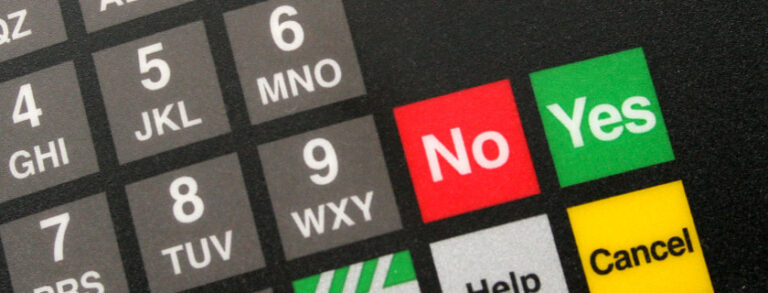
- Control panels and instrumentation. Domed labels used alongside a printed graphic overlay to give a brand mark or key legend more physical definition.
- Resin domed name badges. Staff and visitor identification, and reusable badge systems that get dropped, clipped and pocketed regularly. A domed badge can offer better protection than a laminated card in the same conditions.
When something else is the better answer
A domed badge is primarily a finish, so it will not suit every identification requirement. Rating plates and data plates that require permanent marking, or that face sustained heat or direct solvent contact, may be better suited to anodised aluminium or chemically etched stainless steel, where the image sits within the metal rather than beneath a coating.
Resin also adds thickness. If the application has tight clearance, or the label sits under a moving part or close to a gasket line, a flat overlay may be a better fit. And in Zone-rated or fire-performance environments, material certification and application requirements will also influence the specification before the appearance does.
The right choice depends on the environment, substrate and service conditions rather than the finish alone.
Getting the specification right
The performance of resin domed label depends on more than the resin itself. Substrate, surface finish, curvature, exposure, operating temperature and expected service life can all affect the material and adhesive choice.
Colour requirements also matter where repeat batches need to stay consistent, particularly when working to Pantone or RAL references. Artwork, quantity and likely repeat volumes can then help determine the most suitable production route.
Establishing those details early reduces the risk of specifying a badge that looks right on the sample but is less suited to the conditions it will face in service.
Talk to Lexicraft
Lexicraft has manufactured precision identification products in the UK since 1956, including domed badges, nameplates, labels and graphic overlays. That range allows the specification to be considered around the application rather than around one particular manufacturing process.
For a domed badge, that may mean looking at the substrate, environment, expected service life and artwork before deciding on the resin, adhesive and construction. Where another identification method is better suited to the application, that can be considered at the same stage.
If you are specifying resin domed labels for a new product or reviewing an existing badge, speak to Lexicraft about the application and the conditions it needs to withstand.